


Some people made a killing betting on Iran strikes over the weekend.
People bet $529 million on Polymarket over whether and when the U.S. would strike Iran. And a few large bids placed just before the war began on Saturday are especially raising criticism. Six new accounts made a combined $1.2 million with last-minute bets on the conflict starting on Feb. 28, thus raising allegations that they were administration officials with inside information. Another new account, with the anonymous handle “Magamyman,” placed an $87,000 bet just 71 minutes before news broke of the strikes, and thus quickly made more than $515,000 on the site where Donald Trump Jr. is an advisor.
While some people profit financially off death and war, others seek to score theological points. Like Franklin Graham. Early on Saturday morning as news of the strikes emerged, the evangelist posted on Elon Musk’s X platform his support for the mission along with his hope that the war would help the Iranian people “be set free from the bondage of Islam.” Nothing like a little crusader theology to wake one up in the morning!
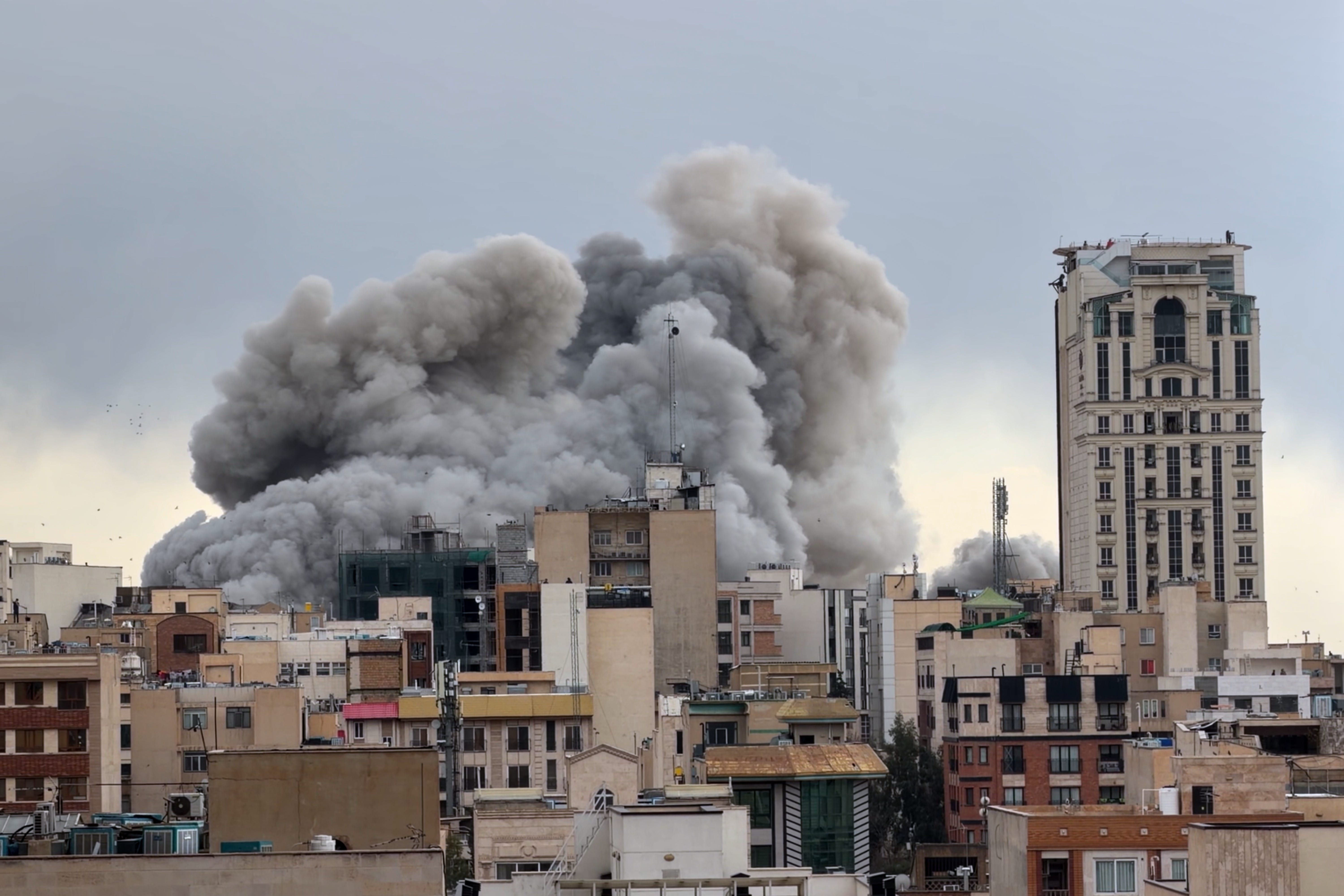
Of course, it’s not surprising that a modern Rasputin would back yet another war. In December, he preached during the “Christmas” service at the Pentagon, praising “a God of war” and even lifting up a biblical passage that’s been used to justify genocide against women and children. Meanwhile, one of the first strikes in Iran hit a girls’ elementary school and killed more than 150 people.
Pete Hegseth, who likes to call himself the “Secretary of War,” shares Graham’s crusader zeal — and not just with crusader-inspired tattoos. During the National Prayer Breakfast last month, Hegseth claimed the United States is “a Christian nation” and declared that any “warrior” who dies for the country “finds eternal life.” At least four U.S. military members have been killed in the war against Iran.
During a worship service at the Pentagon in January, Hegseth said that before and during the U.S. attack on Venezuela, he was reading a Psalm about war. The Pentagon has not responded to my question about if Hegseth similarly studied a biblical passage last week as he planned the Iran strikes. However, during a press conference this morning, Hegseth described U.S. soldiers as fighting with God’s “providential arms of protection.” He added that he prays they will have “the biblical wisdom to see what is right and the courage to do it.” Ironically, he said all of that after attacking Iran for making military decisions based on religious fundamentalism: “Crazy regimes like Iran, hellbent on prophetic Islamist delusions, cannot have nuclear weapons.”
But while Graham and Hegseth bet on a holy war where God is on their side, many Christian leaders in the United States and around the world were quick to condemn the so-called “Operation Epic Fury.” So this issue of A Public Witness looks at mainline Protestant and Catholic criticism of the Trump administration’s actions in Iran and the pleas for peace by Middle Eastern Christian leaders.
Mainline and Catholic Condemnation
On Saturday, the World Council of Churches quickly condemned the military attack on Iran as well as the retaliatory strikes as the conflict escalated. The WCC is a fellowship of more than 350 denominations and groups in more than 110 countries. In the U.S., it includes as members various mainline, Black, and peace church denominations in addition to the Orthodox Church.
“This dangerous spiral of violence places millions of civilians at immediate risk, undermines regional and international security, and threatens already fragile economic and social stability across the Middle East,” WCC General Secretary Jerry Pillay, a Presbyterian theologian from South Africa, said in the statement. “The WCC reiterates that disputes between states must be resolved through dialogue, consultation, and adherence to international law. … Violence will not secure the future of the region; only justice, accountability, and sustained diplomatic engagement can lay the foundations for lasting peace.”
Rev. Karen Georgia Thompson, general minister and president/CEO of the United Church of Christ, on Saturday denounced the attacks as “evil” and an “abuse of government might.”
“We call on Christians to act from the power of God with courage and a love that rejects fear of the powers and principalities of our day that would have us cower to hegemonic power,” she added. “We pray for a lasting peace, a deep peace which is more than the end to violence and brings about a just world with flourishing for all, remembering also in our prayers other parts of the world where wars and civil unrest persist. … In these moments, we cry out for peace, while leaders who do not know how to blush choose bluster, bombast, and bombs.”
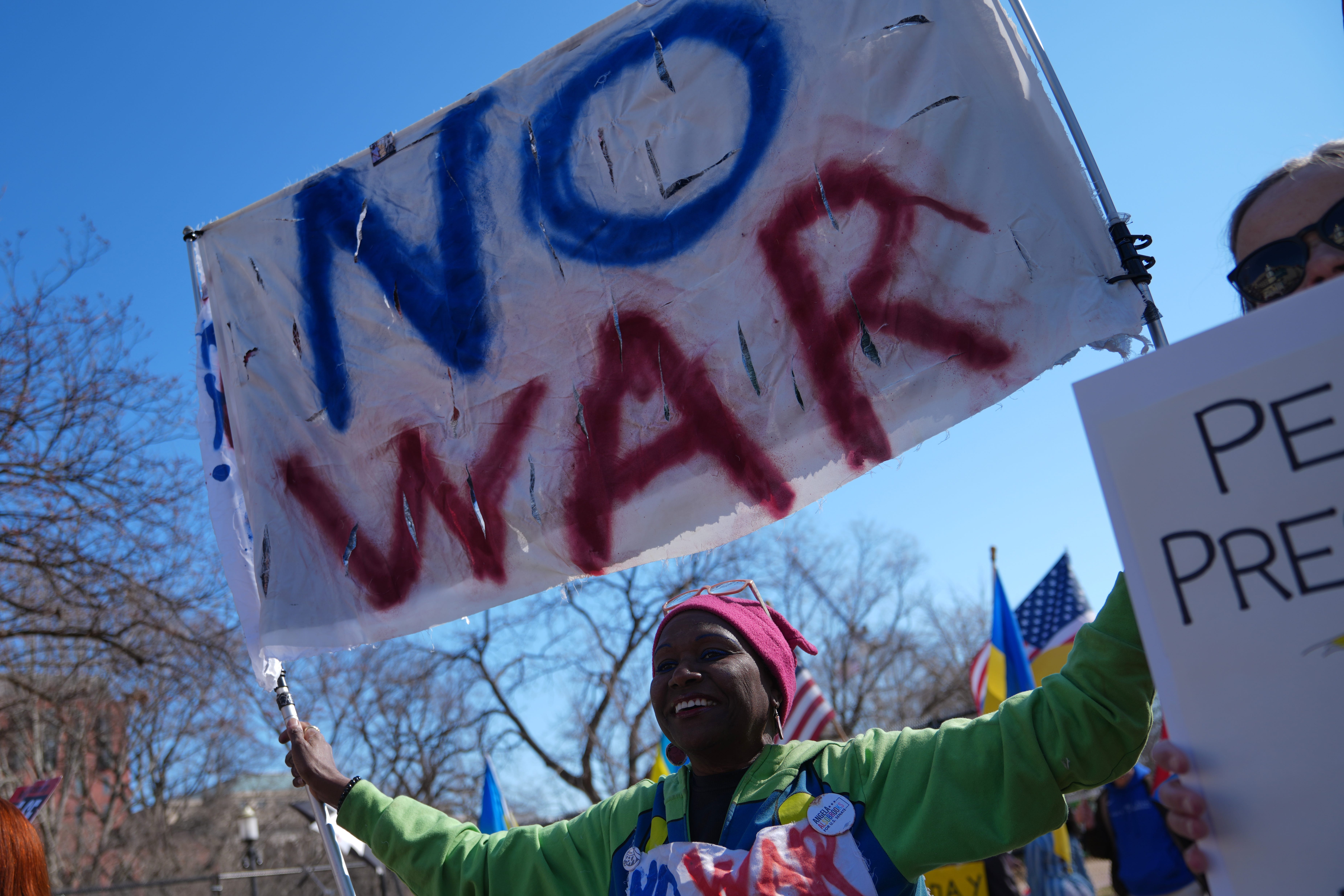
Episcopal Church Presiding Bishop Sean Rowe issued a statement on Saturday that expressed “alarm” about the news of the strikes and how he had “hoped” such armed conflict would not occur. He urged prayers for Christians in Iran, Israel, and across the Middle East, as well as for an Episcopal bishop from Connecticut and others who were traveling in Jerusalem at the time the conflict erupted.
“As Christians who follow a Prince of Peace, we mourn that today’s attacks will surely mean further hardship for the most vulnerable Iranians and, as retaliation inevitably follows, suffering that will spread across the entire region,” Rowe added.
The Presbyterian Church (U.S.A.) put out a statement on Monday morning expressing how they are “deeply troubled” by the conflict and grieving the lives lost. The statement also emphasized the denomination’s previously expressed belief that “military force must be a last resort, and international disputes must be addressed through sustained diplomacy, accountability, and multilateral engagement grounded in international law.” The PCUSA clearly denounced the “authoritarian” regime that rules Iran with “repression, corruption and human rights abuses,” but added that the conflict isn’t the answer, especially as civilians are being killed.
“Every government, including our own, is accountable for how it wields power, and democracies must guard against actions that erode the rule of law and constitutional restraint,” the statement adds. “Our opposition reflects our conviction that bombs do not create democracy, and airstrikes do not build just societies. … We recommit ourselves to Christ’s call to be peacemakers in a world too quick to reach for war.”
Catholic leaders were also quick to condemn the outbreak of war over the weekend. Pope Leo XIV expressed his “deep concern” on Saturday about the conflict and urged all parties to “stop the spiral of violence before it becomes an irreparable abyss!”
“Stability and peace are not built with mutual threats, nor with weapons, which sow destruction, pain, and death, but only through a reasonable, authentic, and responsible dialogue,” he added. “Let us continue to pray for peace.”
Similarly, Archbishop Paul S. Coakley, president of the U.S. Conference of Catholic Bishops, called on the U.S., Iran, and other nations to “halt the spiral of violence” before it becomes “an unbridgeable chasm.” In addition to requesting Catholics pray for peace, he also urged them to “pursue the common good over the tragedy of war.”
Middle East Christians in the Crossfire
The U.S. and Israeli attack on Iran threatens to spill over into the broader Middle East. Iran responded with strikes in Israel, Bahrain, Iraq, Kuwait, Qatar, Saudi Arabia, and the United Arab Emirates. Additionally, conflict between Israel and Lebanon fired back up with Hezbollah forces firing rockets at Israel and the Israeli military bombing Lebanon.
Literally caught in the crossfire are many historic Christian communities. Many churches across the region closed, with Sunday services moving online or being canceled.
Thimar (a Baptist group in Lebanon that oversees various educational and social development ministries) issued a statement Saturday noting that some of its leadership was attending a conference with other Christian leaders from across the region in Dubai in the United Arab Emirates. As the conference continued, the air defense systems above Dubai intercepted incoming retaliatory strikes from Iran. And because of the conflict, flights were canceled, leaving the Christian leaders stranded.
“This moment is one of immense magnitude, one that could drastically reshape the region for decades to come,” Thimar added in its statement as it urged prayers for peace. “While headlines now focus on military developments and geopolitical consequences, we remain committed to strengthening local churches and Christian leaders, supporting families affected by violence, and fostering reconciliation between communities. … May [God’s] light guide us through the darkness ahead.”
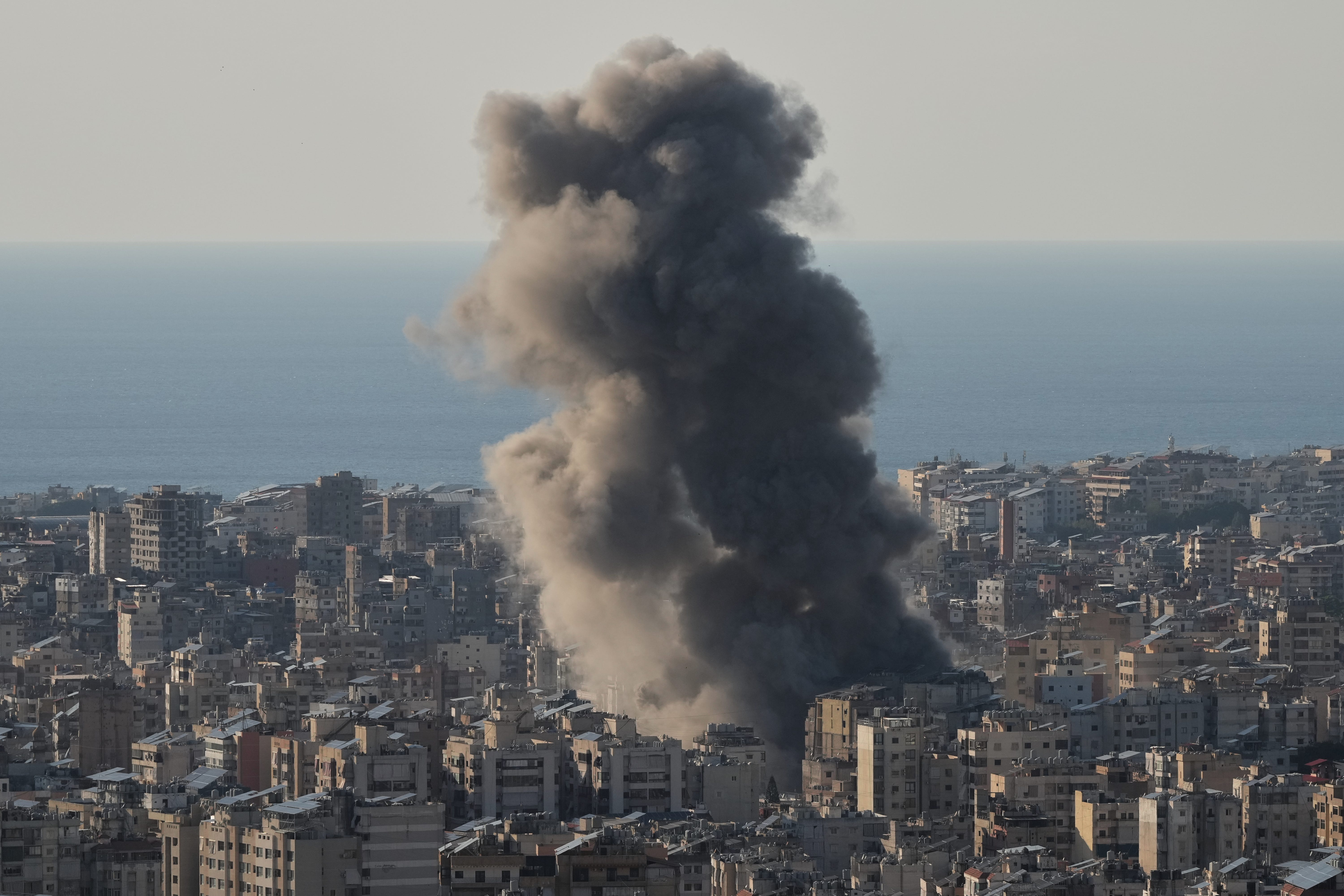
Anglican Archbishop Hosam Naoum, who leads the Anglican church in the Middle East, expressed his concern on Saturday about the attacks and how “the cycle of violence has expanded with terrifying speed.” He noted that Christians across the region are experiencing the terror, including those in the Diocese of Iran, the Diocese of Cyprus & the Gulf, and the Diocese of Jerusalem.
“We pray specifically for a ‘sound mind’ for the leaders of the United States, Israel, and Iran, that they might recognize the futility of this bloodshed and turn back from the precipice of a global catastrophe,” he added. “In a time of ‘regime change’ rhetoric and military ultimatums, let our message be the unchanging promise of Christ’s peace: to build each other up (1 Cor 8:1), for our hope is not in the strength of armadas or missile shields, but in the Prince of Peace.”
Bethlehem Bible College, a Christian school in the West Bank, issued a statement on Monday morning about the “very heavy and uncertain moment in our region.” They urged prayers for peace, protection for civilians, and courage for Christians in the region to faithfully minister.
“War once again casts a long shadow over the Holy Land and the broader Middle East. Violence, fear, and instability affect everyone — families, churches, ministries, and the most vulnerable among us. In times like these, no one remains untouched. War does not discriminate; it leaves emotional, economic, and spiritual wounds in every community,” the school noted. “Our students, faculty, and church communities carry anxiety for loved ones, uncertainty about the future, and concern for daily safety and provision. … We do not ask for sympathy; we ask for solidarity in Christ.”
While Hegseth, Graham, and others may invoke faith to justify starting a new war, Christians in the region are urging peace. The toppling of the evil dictator Saddam Hussein should have taught us the geopolitical folly of thinking two wrongs make a right. May we join Middle Eastern Christians in praying for peace and justice across the region. And may we join mainline Protestant and Catholic leaders in prophetically speaking out against an unlawful and dangerous operation that undermines peace.
As a public witness,
Brian Kaylor
Coverage of this aspect of the Trump War against Iran is much appreciated. As we continue to watch the Trump War, commenced with the assassination of the leader and many of the top government officials of Iran, I suggest not being detracted by how bad we view the Iranian leader and his regime. If that was truely the reason for placing American service men and women in harms' way, not to mention Americans around the world and hear at home, why didn't Trump start his war in his first administration. Do not overlook or be distracted from the simple fact, there was No Immediate Threat to our nation from Iran. In the days leading up to this unilateral, unprovoked, unnecessary attack, the Iranian negotiator, as well as, the U. S. Secretary of State indicated progress was being made in the talks in Geneva. The President on Feb. 19, had given Iran 10 -15 days to come to an agreement on the future of their nuclear program. However, he lied, 8 days after he started His War! Prayers from Christian Leaders for the safety of Christians in the Middle East are certainly called for, however, in the spirit, if not the letter, of what Jesus taught, our prayers need to extend to the Iranian people irrespective of their faith. There are already casualities in Iran of innocent people, there will be more, and before Trump's War is concluded, more American lives, any not just service men and women, but civilians are likely to be killed. And, no definitative reasons have been articulated as to why Trump started his war, and the overwhelming majority of Republicans will not demand any explanation, but will simply follow and endorse Trump's War! Tragic times for the Republic - how much longer can we keep it, or is it too late. I pray not!