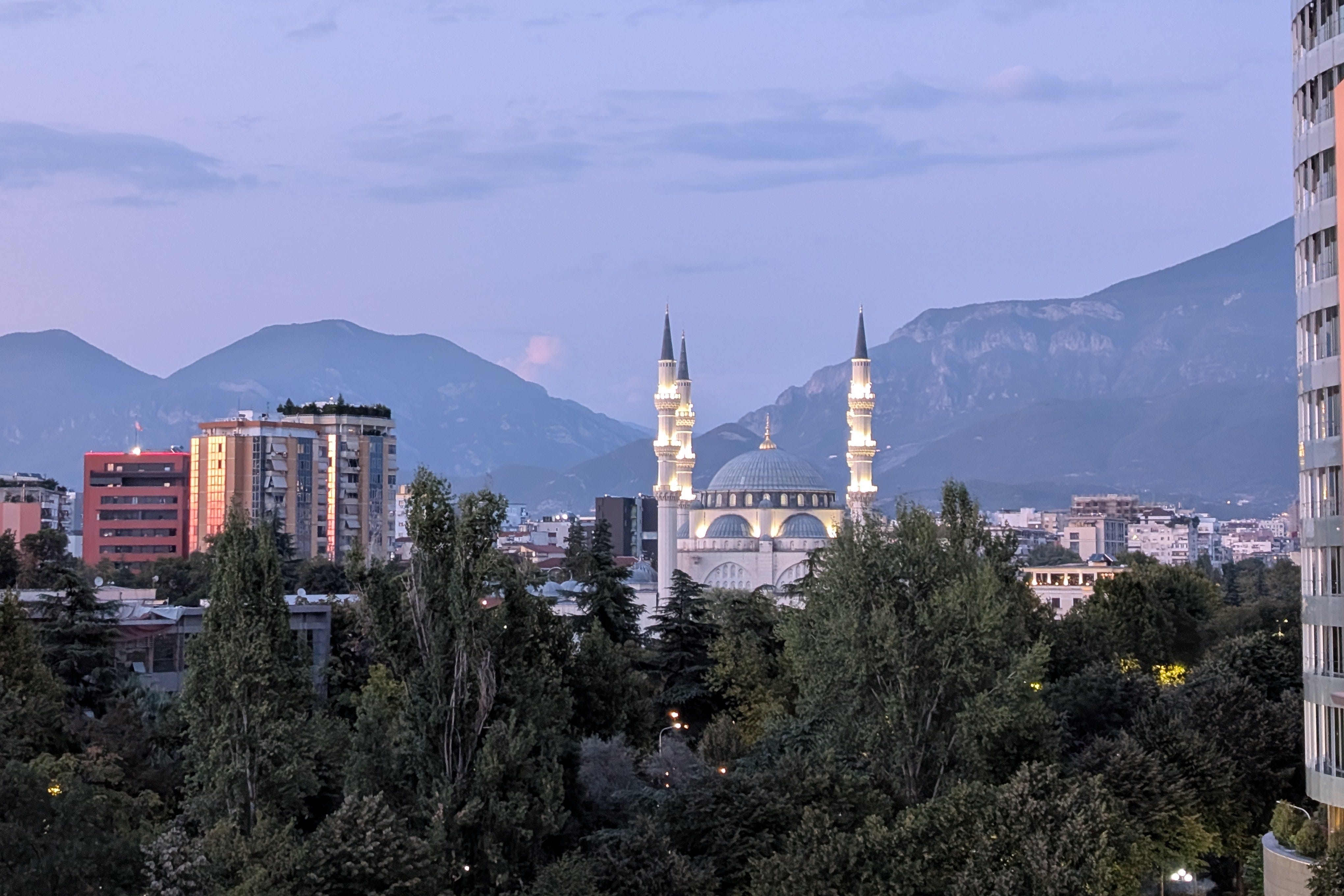
In September 2014, Pope Francis sparked headlines with a surprising choice for the first European pastoral visit of his papacy: Albania.
A predominately Muslim nation, it had become the first constitutionally atheist state in 1967 during the Communist dictatorship of Enver Hoxha, who also isolated the nation from the rest of the world. Only 8% of Albanians claim Catholicism, with another 7% as Eastern Orthodox and less than 1% as Protestant. But in this land where more than half of the population adheres to Islam, Mother Teresa is a national hero and the nation now celebrates its religious coexistence. So Francis went to honor that, while also remembering Catholic clergy and members who were tortured and executed for their faith by the Communist regime that fell in 1991.
“The climate of respect and mutual trust between Catholics, Orthodox, and Muslims is a precious gift to the country,” he declared during an event in the capital of Tirana. “This is especially the case in these times where an authentic religious spirit is being perverted and where religious differences are being distorted and instrumentalized by extremist groups. … What the experience in Albania shows, rather, is that a peaceful and fruitful coexistence between persons and communities of believers of different religions is not only desirable, but possible and realistic. The peaceful coexistence of different religious communities is, in fact, an inestimable benefit to peace and to harmonious human advancement. “
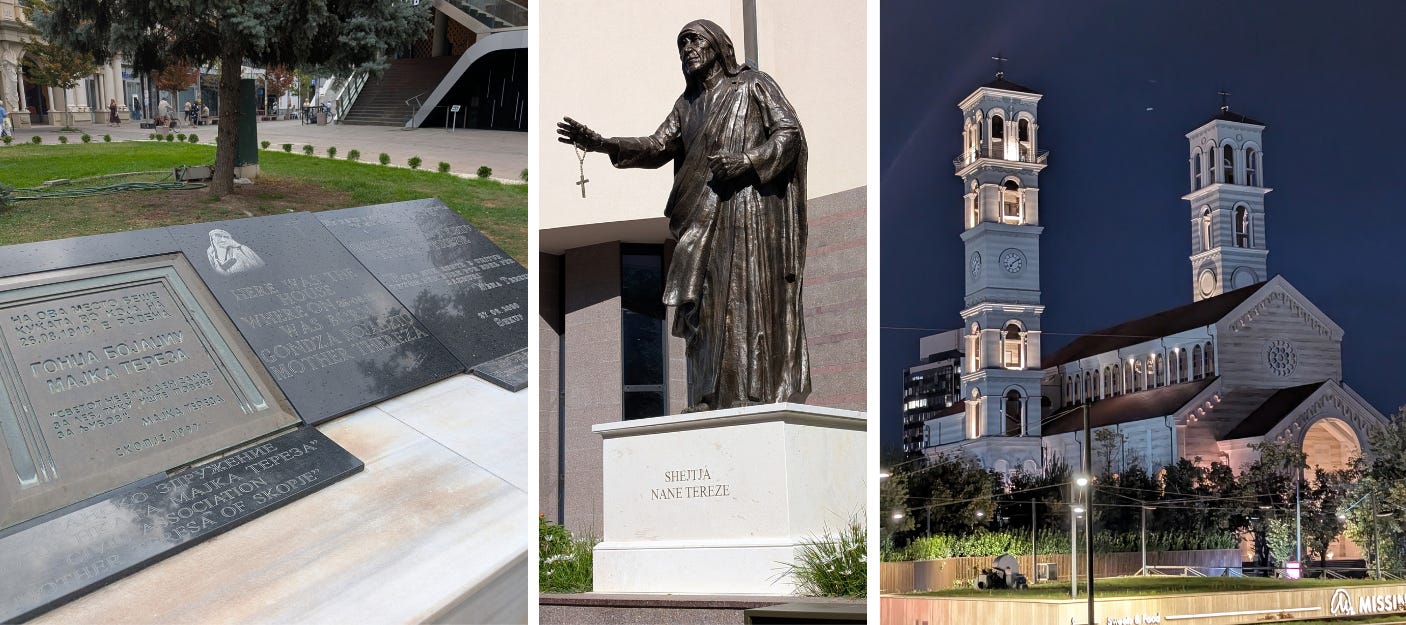
Two years later, Francis declared Mother Teresa a saint. Born to a Kosovar Albanian family in Skopje (then part of the Ottoman Empire but now the capital of North Macedonia just to the east of Albania), she is celebrated across the southern Balkans by people of various faiths. As is Francis for his visit.
Shortly after announcing Mother Teresa would become a saint, political leaders in Albania unveiled a statue of Francis in Tirana on a prominent street near a large pyramid originally built to honor the longtime Communist dictator — but which today serves as a popular place for locals and tourists to view the city skyline. Nearby sits St. Paul’s Cathedral, a Catholic church that Pope John Paul II laid the cornerstone for in 2002. Honored inside with stained-glass windows are the apostle Paul, Mother Teresa, and Popes John Paul II and Francis. John Paul II has his own statue in Tirana a bit farther away, next to Sheshi Nënë Tereza (Mother Teresa Square), which you can visit after flying into the city’s international airport also named for the famous nun.
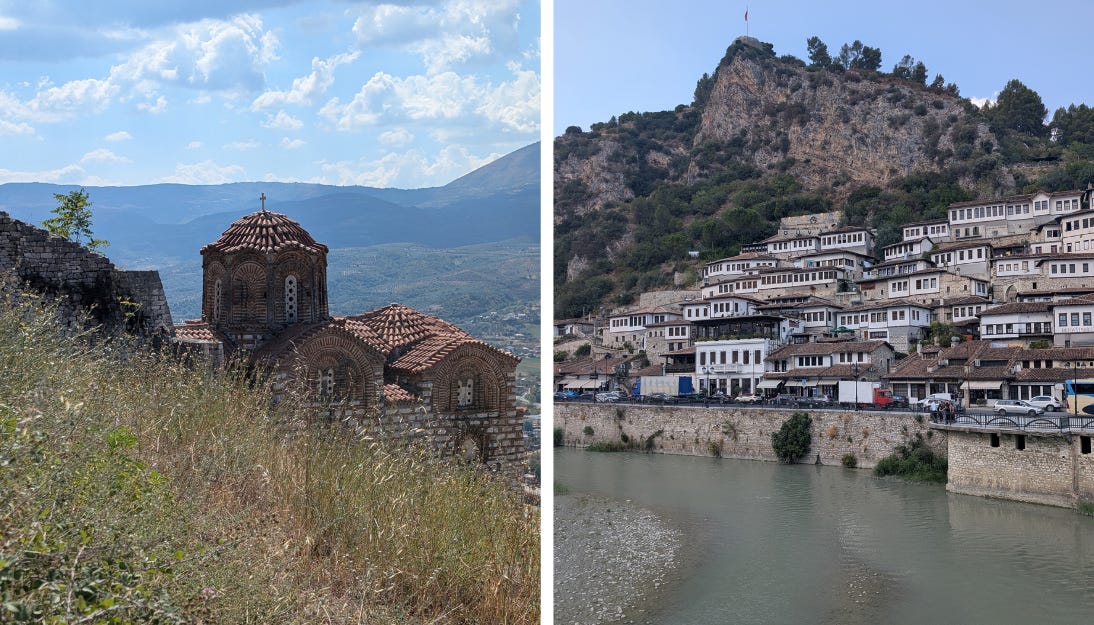
The unique history of Albania — from missionary stops by Paul to a site of Roman and Byzantine Christianity to hundreds of years under the Ottoman Empire that persecuted Christians to a Communist regime of 55 years that outlawed religion — as well as its reputation today for peaceful religious coexistence drew Francis to the nation. And all of this is still celebrated in Albania, as I learned during a recent visit to attend the annual council meeting of the European Baptist Federation.
With individuals from more than 30 nations in Europe, Central Asia, and the Middle East in attendance, Baptist, Anglican, and Lutheran speakers considered faith in the context of war, nationalism, political and social challenges, technological advances, and more. So this issue of A Public Witness travels to the “Land of the Eagles” to learn from Christian leaders ministering in challenging contexts.
New Opportunities Together
Various churches and denominations had to relaunch after the fall of Communism three decades ago. While a Baptist church had started in 1932, the Communist dictator shut down every place of worship, imprisoned and even executed many clergy members, and criminalized owning a Bible. So like with many churches, there was nothing left.
As the nation’s doors suddenly opened in 1991, the European Baptist Federation sent a retired Canadian missionary couple to survey the possibilities for work. Alan Donaldson, a Scottish minister who today serves as EBF general secretary, noted that EBF immediately started sending resources to launch churches and then a denominational body. He sees that success as a model for doing more work together “through the power of God” and “through our collective energy and resources.”
In 1999, four Baptist churches came together to start the Baptist Union of Albania. In a symbol of the changing times, they met in a building built by the late Albanian Communist dictator and where the first stone had been placed by Soviet dictator Nikita Khrushchev.
In addition to electing leaders and approving governing documents, the new Albanian group passed a resolution at its constituting meeting. The first topic that this fledgling group decided to address was helping refugees. Noting the “utterly tragic predicament” of Kosovar refugees fleeing the ongoing NATO-Yugoslavia war in the neighboring area of Kosovo. The resolution expressed “solidarity to the Kosovar brethren forced out of their homes and their land and undergoing the most atrocious suffering for their lost relatives and daily hardships as well as to all those persons in Yugoslavia who suffer the consequences of this war.” Additionally, it called for “a just settlement of the Kosovar conflict and an end to the war be found soon.” It also included a plea for God to “comfort and meet the basic needs of all the victims of this war, whatever their ethnic origins.”
Today, there are 10 Baptist churches in Albania with a total of about 250 members in a nation of nearly 2.8 million people. In all, there are estimated to be fewer than 10,000 Protestants in the country. But they now enjoy religious freedom. And the Baptist union set a goal of not just receiving assistance but also sending out their first international missionary in the new few years.
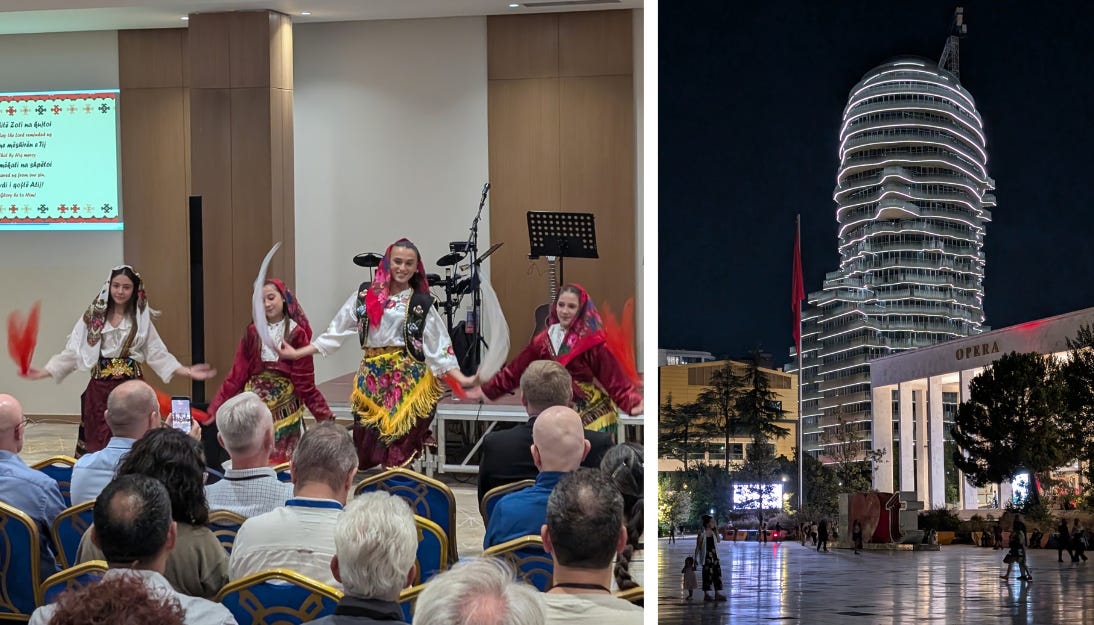
For the Albanian hosts of the recent meeting held on the coast of the Adriatic Sea, the fact that people came from various countries was meaningful. And it underscores that they are part of a bigger movement than what they see just in their nation.
“For us, this meeting means much more than simply hosting a meeting. We are a small Union, but we are part of a much larger family,” said Edmond Palucaj, president of the Baptist Union of Albania. “From the very beginning, this relationship has felt like a family relationship. … We need one another.”
Beyond helping start churches and the Union, he noted other times when EBF and Baptists in other countries assisted those in Albania, including when thousands of people from Kosovo entered as refugees in the late 1990s and then again in 2004.
Elijah Brown, an American who serves as general secretary & CEO of the Baptist World Alliance, argued that the history of Albania makes an appropriate place to consider the challenges faced by many Christians today around the world.
“As a Baptist global family, we are working to stand alongside our brothers and sisters in Ukraine and Myanmar and Gaza and Nicaragua,” Brown said. “What does it mean to gather in Albania — a country that faced great challenges not so many years ago — and to say, again, ‘We are Baptists’ when one out of every four Baptists in the world today faces war, persecution, and extreme hunger.”
Such contemporary situations were indeed a key area of focus for the three-day gathering in Albania.
Ukraine and the Middle East
Although Albania still suffers from democratic deficiencies and official corruption — which has sparked months of protests against the long-serving prime minister and the Trump family — it is a place where Christians are free to worship in peace. Other places in the EBF are experiencing more difficult times. As Alan Donaldson of the EBF noted, there are issues of migration — including political backlashes to immigrants — in various countries, along with “increased polarization in many places and questions and concerns about Christian Nationalism.” And then there are the wars and rumors of wars.
“Increasingly, churches have been damaged,” Donaldson said as he recounted visiting Ukraine last month as part of a delegation of denominational leaders and pastors. “Thousands of children remain abducted. And though the scars of the physical war are often quickly repaired, the scars of trauma, sleeplessness, loss, and worry for loved ones are increasing daily.”
“Maybe a less-known story is that of Ukrainian people living in the occupied territories. Three hundred and twenty Baptist churches under occupation. Eighty buildings that have been destroyed, he added. “Stories continue to reach us of murder, persecution, and hunger in those communities. And we feel powerless to reach out and help them. Religious freedom suffers, as does every other form of freedom in the occupied territories.”
Igor Bandura, vice president of the All-Ukrainian Union of Associations of Evangelical Christians-Baptists, talked about the trauma of constant bombings as “Kiev is bombarded day and night now.” School is interrupted several times each day because of Russia’s attacks. And one has to decide if going to the grocery store or gas station is necessary because it “can be attacked and you can be killed.” In this context, he urged Christians elsewhere not to take the approach of trying to avoid being “political” since “you cannot separate the political” from what is happening and what is needed to bring about justice and a just peace.
“As churches and people in each country, we should stay against combining Christianity with nationalistic ideas, what we call Christian Nationalism. Because it’s a very dangerous mixture, which really changed the mindset of people and then people with God’s name on the shields started to do terrible sins,” Bandura said. “Keep your prophetic voice, speaking about God’s values, justice. Stand against propaganda.”
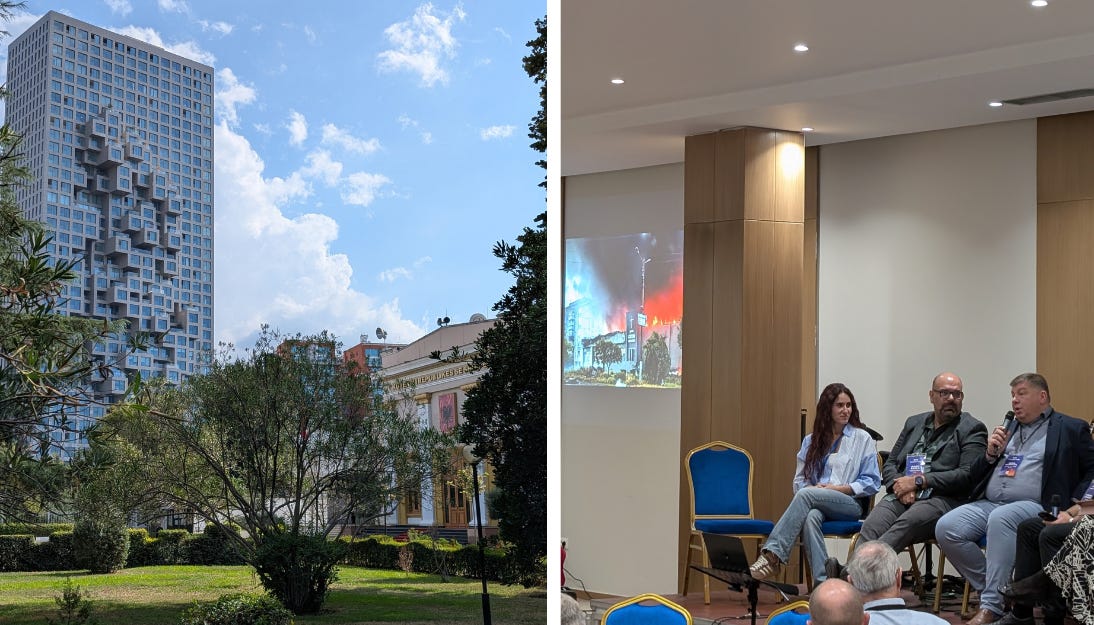
Another place where war has impacted life and ministry for many in the room is the Middle East. Baptists from Israel, Lebanon, Jordan, Iraq, and Egypt were among those at the gathering. In addition to war following the October 2023 terrorist attacks by Hamas, many in the region have experienced missile strikes this year after the U.S. and Israel attacked Iran.
Joy El Kazzi, a program officer at MERATH (a Christian NGO in Lebanon assisting refugees in the country), noted that because of the war, her church couldn’t meet in its building out of concerns that it was too close to where bombings might occur. So they started meeting in different locations. She said that the state of not knowing if a bomb might hit where you are “took a toll” on her and her family. In light of this, she admitted it can be difficult to love one’s neighbors. But she added that they’ve been trying to practice this for years before the recent conflict with Israel as they welcomed refugees from Syria (who had previously occupied Lebanon).
“When the war started in Syria, we had an influx of refugees into Lebanon. We were faced with this question,” El Kazzi explained. “Our pastors were saying, ‘It’s time to practice what we preach, and we always preach love your enemy. Are we going to do that now?’ And it was very difficult. … Even as a good Christian, you take a lot of time to kind of heal this trauma and be able to open your doors and say, ‘I want to help.’”
Rani Saba, general director of the Association of Baptist Churches in Israel, similarly mentioned the toll of constantly hearing alerts about possible missile strikes and seeking to continue to minister to everyone. He explained that the constant threat of attacks means sheltering and then “waiting for something to happen.” Because of this, trips to visit someone or go church can take “maybe 10 times” as long because of the need to stop, shelter, and wait. And not all of the churches have a shelter.
“It affects everything,” added Saba, who lives in Nazareth.
It can also impact how one reads the Bible, he added. He noted that “sometimes Bible verses become different when you are in the middle of a war or conflict.” He explained that the war “gives you a different insight” and the new way of reading a verse “becomes close to your heart. It releases you and gives you hope.”
Saba added that they need Christians in other countries to pay attention and “support not one side but the people inside these countries and support the churches.”
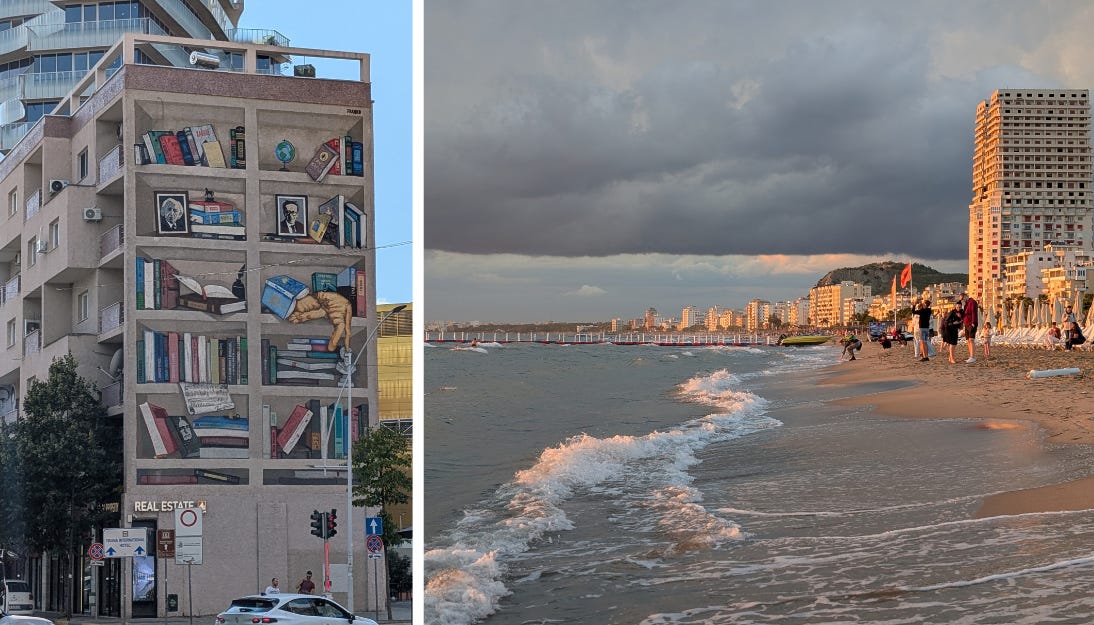
Supporting one another by learning from each other and building relationships is exactly why people traveled from various countries to Albania for the meeting. As Donaldson of EBF noted, there are lots of challenges for churches in the region. But through it all, they must come together as a family.
“Connecting is increasingly challenging,” he acknowledged. “Visas are becoming more challenging to obtain as nations tighten their borders — that’s making connections harder. And the rise of nationalism in many of our nations, sadly, also results in an underlying current of mistrust between nations that can be reflected in the way we view each other — especially the longer we spend apart from one another. We overcome them when we come together, and that’s why it’s so important for us to connect face to face, hand in hand.”
As a public witness,
Brian Kaylor