


It’s that time of year when signs for political candidates and causes dot the lawns of houses, farms, and businesses. Churches, like other tax-exempt nonprofits, cannot endorse candidates. But since they can push ballot measures, numerous churches across Missouri have also decorated their lawns for the political season this year. Yet, the signs proudly posted by many churches are deceptive.
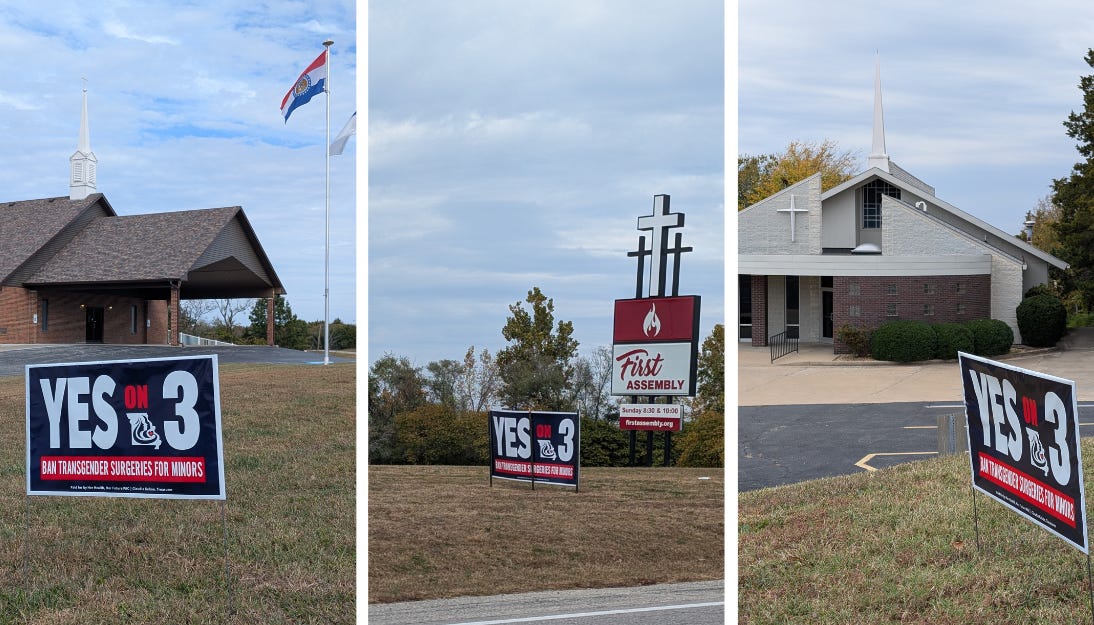
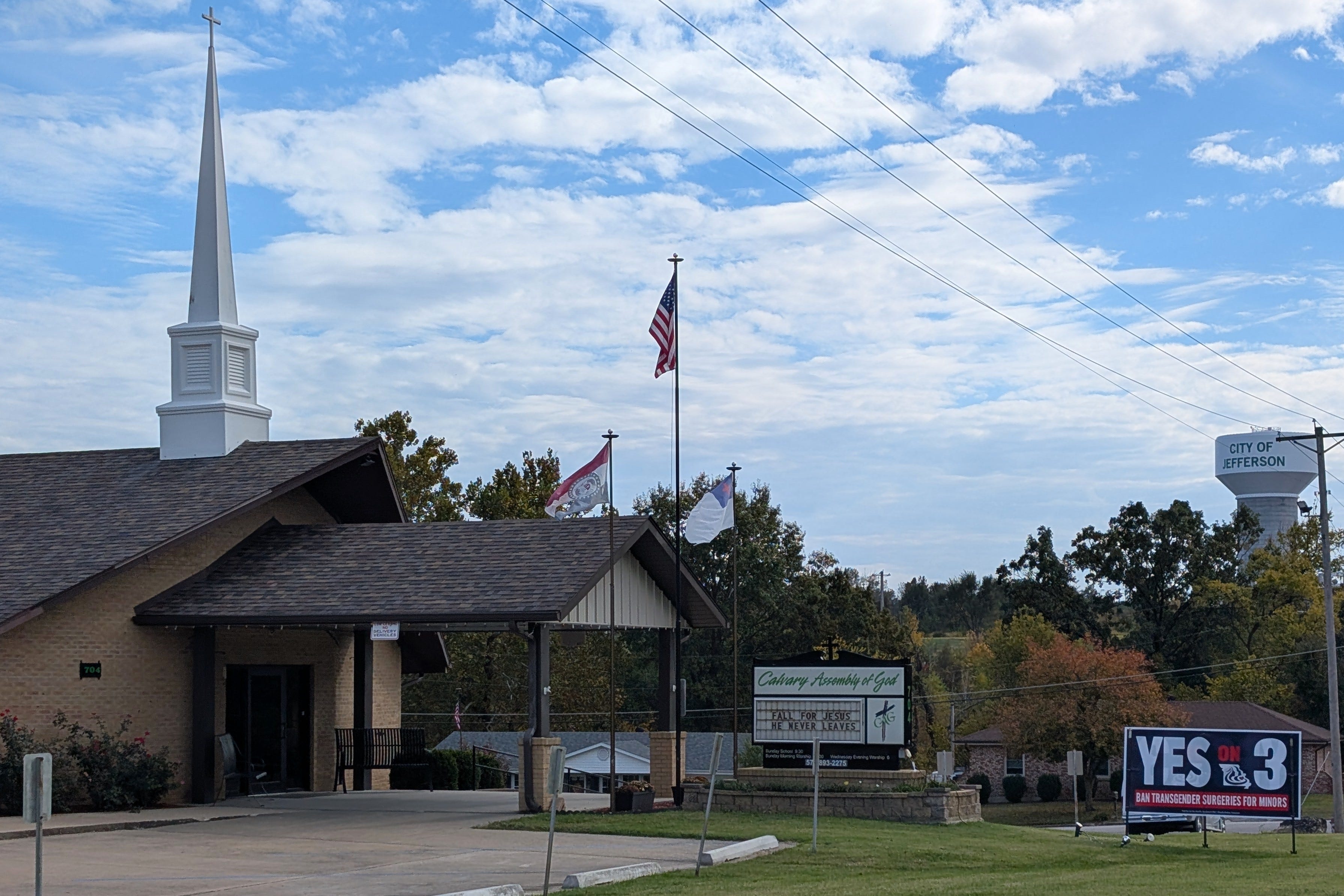
Some churches, businesses, and homes in the Show-Me State host signs featuring a woman holding a baby and urging people to support Amendment 3. It’s an effort to ban most abortions, which is why the signs opposing the amendment declare, “Stop the Abortion Ban.” Yet, as you drive around you’ll notice many more signs pushing for people to vote for what sounds like a different Amendment 3: “Ban Transgender Surgeries for Minors.” It’s the same ballot measure, but these signs don’t mention that it’s actually an abortion ban. And it’s this anti-transgender sign that many churches decided to evangelize with.
To understand what’s going on, we must back up a bit. In 2019, Missouri lawmakers passed a law to ban nearly all abortions. However, they couldn’t actually implement it at the time, so they included a trigger clause saying it would go into effect if the U.S. Supreme Court overturned Roe V. Wade. When that occurred on June 24, 2022, then-Missouri Attorney General Eric Schmitt (and now an Atlanta Hawks fan in the U.S. Senate) proclaimed almost immediately that the ban was official.
That triggered some litigation, including a lawsuit by clergy challenging the 2019 abortion ban as a type of religious establishment for invoking “Almighty God” in the law as legislators made it clear they were implementing their sectarian beliefs. However, before the various lawsuits reached completion, Missouri voters took action. In 2024, even as Donald Trump won the state by 18 points, voters passed a state constitutional amendment by a 52%-48% margin to enshrine reproductive freedom and therefore block the abortion ban. Coincidentally, it was that year’s Amendment 3.
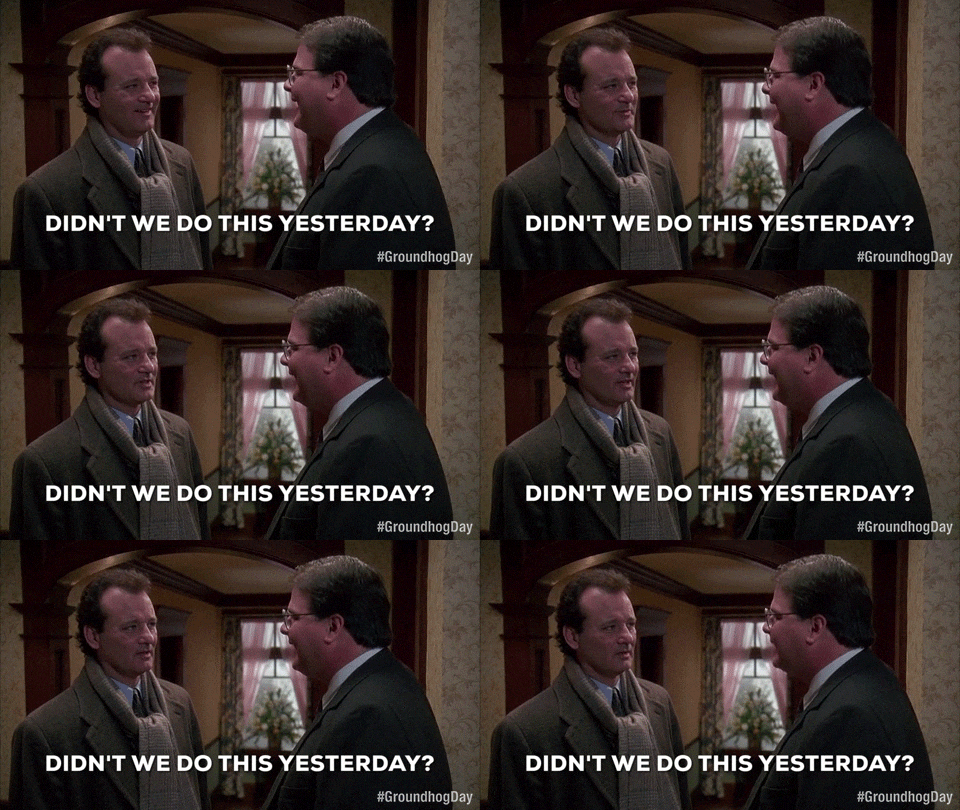
Upset by we the people thwarting their ban, state lawmakers decided to put the issue right back on the ballot this year with a new constitutional ban to undo the one passed in 2024. The fact that they keep ignoring or overturning statewide ballot initiatives is why there’s another measure this year, Amendment 6, that would curtail the ability of lawmakers to reverse votes of the people. If the provisions in Amendment 6 were already in place, this year’s abortion ban would not be on the ballot. Amendment 6 is basically an effort to help voters no longer feel like Bill Murray in Groundhog Day.
And here’s where the political dishonesty shows up. Since Missouri voters literally voted to block an abortion ban in 2024, lawmakers recognized it would be hard to get the same voters to approve an abortion ban in 2026. So they decided to add some ballot candy, which is throwing in another provision that’s more popular so people will vote for that and perhaps not realize what the amendment actually does. And what’s one of the biggest political boogeymen right now? Transgender minors.
Across the country we’ve seen desperate Republicans try to attack Democrats for supporting transgender surgeries and athletes. It’s a main line of attack (often inaccurately) against surging candidates like James Talarico in Texas and Rev. Adam Hamilton in Kansas. State legislators in 19 states this year passed 63 anti-trans bills, and many states (including Missouri) have recently seen more bills introduced in a single year to ban transgender athletes than the number of such athletes.
Most absurdly, as Trump has been holding campaign rallies across the country, he often makes the false claim that parents send their son to school in the morning and then pick up their child after a “brutal operation” that the school pushed without telling the parents. To be clear, this is a gross lie. Kids are not coming home from school after a surprise transition surgery. (The real threat is kids not coming home from school because of another mass shooting since our politicians refuse to do anything to save our children from gun violence.)
Some anti-abortion activists and pastors claimed two years ago that the Missouri ballot initiative to enshrine reproductive rights would allow for medical surgeries for transgender children, but that was debunked by legal and medical experts at the time after it appeared in bulletins at Catholic parishes. And we know the rhetoric was inaccurate because the amendment passed and such surgeries still were not allowed. But while making that a secondary issue didn’t work two years ago, anti-abortion groups hope they can find success now by making transgender issues the main topic.
Here’s the simple truth: Regardless of how people vote on Amendment 3 next week, medical surgeries for transgender minors will be banned in Missouri. That’s because there’s already a ban in place, which was unanimously upheld by the state Supreme Court earlier this year. What will change if Amendment 3 passes is the implementation of a ban on most abortions. But fearing they can’t win on that issue, anti-abortion groups are trying to make the amendment seem like it’s about something else.
“If we talk to people about the trans part of this amendment,” an activist said during a Republican meeting, “we can get it to pass.”
This is a calculated political strategy to confuse voters — and many churches are joining in. By my unscientific observation of churches as I’ve driven around the state, those with pro-Amendment 3 signs are much more likely to post the “Ban Transgender Surgeries for Minors” banner than one about abortion. Yet, even one of the most Christian Nationalist and anti-abortion lawmakers — who was the sponsor of the bill that banned “gender transition procedures” for minors — has criticized such political messaging.
“They’re being disingenuous and they’re saying that now we need to outlaw transgender procedures through the Constitution,” said Republican state Sen. Mike Moon, who has also criticized Amendment 3 for not going far enough in banning abortions. “And I’m thinking we’ve already got it as the law. So why now do you need to say we need it as a constitutional provision?”
This misleading political rhetoric is what many churches are embracing and spreading. A Southern Baptist church last month even held a rally in its sanctuary to urge support of Amendment 3 in between worship songs. At one point in the service, they went straight from singing “How Great Thou Art” to showing a political ad (created by an organization led by the governor’s wife) that started by declaring, “It starts with drag queen story hour and ends with children under the knife. Irreversible sex change surgeries on minors — that’s the goal of trans extremists. … Amendment 3 stops them.”
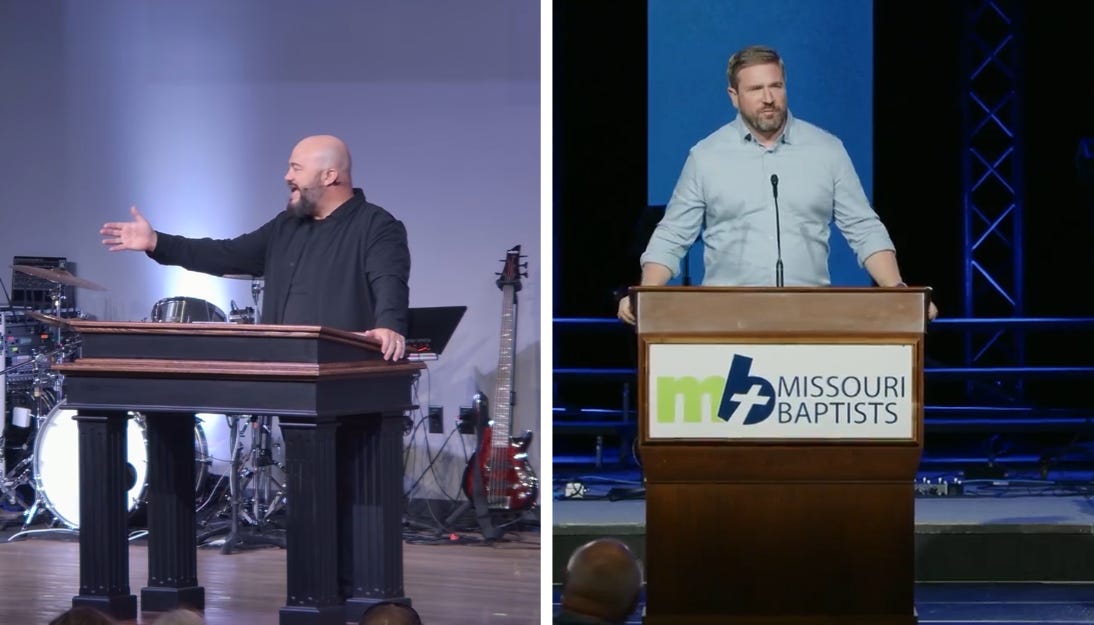
Earlier this week, the annual meeting of the Missouri Baptist Convention featured a push for Amendment 3 made by Andrew Bailey, a former Missouri attorney general who, until last month, served as co-deputy FBI director in the Trump administration. While Bailey actually focused his remarks on abortion, he still emphasized the claim that the amendment would ban “child gender mutilation.” As he urged support for Amendment 3, he also attacked the constitutional principle of church-state separation.
“It’s time we take a stand,” Bailey said. “I believe that the rights in the United States Constitution come from God, not man. … If you read the First Amendment, we have the free exercise of religion, that’s unique. That’s unique in the world, that’s a unique freedom that is given to us by God, protected by our Constitution. But you won’t find the term ‘separation of church and state’ in that Constitution.”
Other churches and denominational bodies have also been campaigning for Amendment 3. And a few mainline Protestant and Unitarian Universalist congregations have countered this with “No on 3: Stop the Abortion Ban” signs outside their buildings.
There’s nothing legally wrong with churches or other nonprofits urging votes for or against a ballot measure like Amendment 3. But there is something ethically problematic with pushing misleading messaging. While lying is sadly too common in our political campaigns, churches shouldn’t join in.
When advocating for a “yes” or “no” vote on a matter, we should be honest about what the vote actually does. After all, Jesus told us our “yes” should be “yes” and our “no” should be “no.” Maybe it’s time to put a truly radical slogan on campaign-like lawn signs: “Thou Shalt Not Bear False Witness.” I approve this message.
As a public witness,
Brian Kaylor