


Here’s the weekly roundup from A Public Witness. In addition to a report on a Georgia race that spilled into a megachurch on Sunday that is free for anyone to read, paid subscribers to A Public Witness received a look at dangerous Islamophobic political rhetoric.


Support our journalism ministry by upgrading to a paid e-newsletter subscription today!
Top 5 at wordandway.org
Why America Loves War. Rodney Kennedy reflected on war, theology, and American TV habits.
Review: The Islamic Mary. Robert D. Cornwall reviewed The Islamic Mary: Maryam Through the Centuries by Younus Y. Mirza.
Judge Strikes Down Arkansas Law Mandating Schools Display a Highly Edited Version of the Ten Commandments. Sara Cline reported on the latest legal decision over an effort in multiple states to force public schools to post a gerrymandered version of the Ten Commandments.
3 Democratic Pastors in Iowa Are Running for Congress, a Snapshot of a National Trend. Krysta Fauria reported on Lutheran, Methodist, and Presbyterian ministers running for office in the Hawkeye State.
From Bush to Obama to Trump, White House Faith Office Persists at 25 Years. Adelle M. Banks looked at the White House faith office and how it has differed in various administrations.

by Brian Kaylor, Word&Way Editor-in-Chief
Speaker Mike Johnson likes to talk about the separation of church and state a lot. But somehow he still hasn’t figured out what it actually means.
During the National Catholic Prayer Breakfast yesterday (March 19), he again criticized people who advocate for church-state separation, attempting to redefine that constitutional concept to justify his Christian Nationalist agenda.
“That phrase, as you all know, derives from not the Constitution, but a personal letter that Thomas Jefferson wrote to the Danbury Baptist Association,” Johnson claimed.
I’m not sure what he means by “personal letter” since Jefferson wrote it to a group and likely knew they would read it corporately. That would be like dismissing Paul’s books in the Bible written to churches as just personal letters and thus having no authority over us. Apparently, Johnson’s trying to make the letter seem less important by calling it “personal.”
Johnson also messed up the talking point a bit. Usually those trying to rewrite the story say the phrase isn’t found in the Constitution. That’s a dumb point since it’s a constitutional principle even if the exact phrase isn’t there. Similarly, the phrase “religious liberty” isn’t in the Constitution, but it’s clearly a constitutional principle. However, to say the phrase isn’t derived from the Constitution shows he’s really not paying attention. Jefferson clearly wrote in his corporate letter that the application of the concept is derived from the language of the First Amendment.
Johnson also repeated his classic error: “The founders wanted to protect the church and the religious practice of citizens from an encroaching state, not the other way around.” With this, Johnson imagines some sort of one-way wall — which is an impossibility! Sometimes I wonder how Johnson is even able to walk around if he doesn’t understand how walls work.

When Jefferson the architect wrote “wall,” he meant wall. He wanted to not just protect churches from being controlled by the government but also protect the government from being controlled by churches. And it turns out that the separation of church and state is good for both.
Other News of Note
Jennifer Schuessler and Zachary Small of the New York Times reported on how the White House’s planning for America’s 250th anniversary is pushing a religious focus.
Jonathan Larsen reported on the support Sen. Markwayne Mullin, Trump’s new nominee to run the Department of Homeland Security, gave to controversial Bible studies in the Senate. Mullin also has ties to City Elders, a Christian Nationalist group in Oklahoma.
Bobby Ross Jr. reported for Religion Unplugged about how Jackson Lahmeyer, the founder of “Pastors for Trump” and MAGA conspiracy theorist, is hinting he’ll launch another run for the U.S. Congress in Oklahoma.
A bill in the Missouri legislature would allow the state to place foster kids in Christian facilities that are unlicensed — despite a history of abuse in such facilities because of the lack of state regulations.
Dozens of Tennessee faith leaders signed an open letter urging state lawmakers to vote against bills pushing public schools to display the Ten Commandments. But legislators went ahead and passed the bill this week, sending it to the governor’s desk.
“I would speak against this bill any time, but especially in this moment when Christian Nationalists threaten both the state and the church; we cannot let them into the classroom.” —Rev. Joe Genau, a Presbyterian pastor in Alabama, during an interfaith rally against Christian Nationalist state legislation. He specifically referred to the problem of a bill that would push unlicensed “chaplains” in schools.
Pope Leo XIV said that Christian politicians who start wars should go to confession.
Leaders from 13 Baptist churches who have partner congregations in Cuba released a joint letter urging the Trump administration to stop restricting the island nation’s access to oil.
Kelsey Kramer McGinnis of Christianity Today reported on the success of a new Wesleyan hymnal popular with congregations that left the United Methodist Church.
The Great Plains Conference of the United Methodist Church returned land to the Kansas Delaware Tribe of Indians after 156 years.
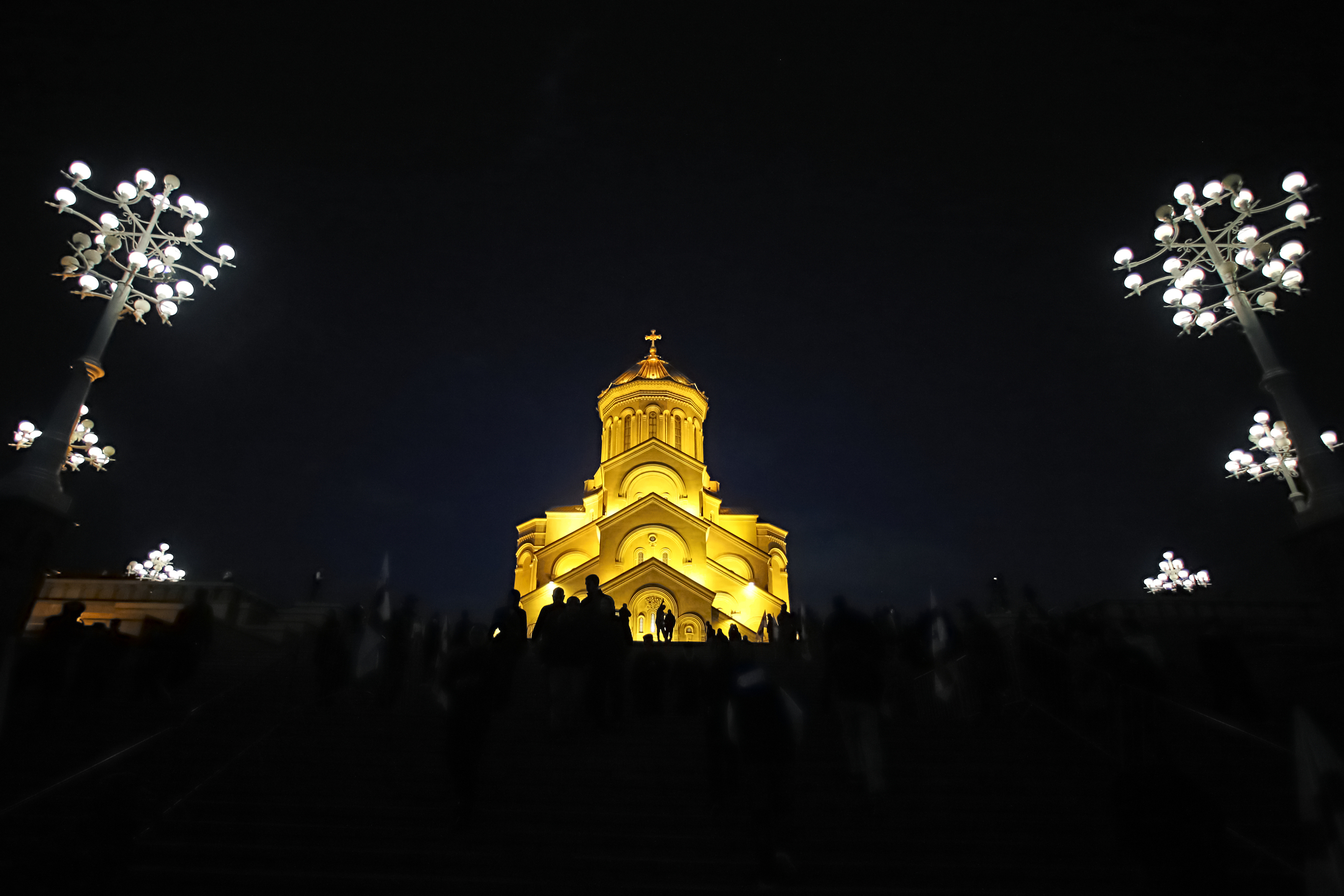
Photo of the Week
Thanks for reading!