


Here’s the weekly roundup from A Public Witness. This week, we published a list of suggested books to curl up with this summer and a report on a conference on Christian Nationalism.


Support our journalism ministry by upgrading to a paid e-newsletter subscription today!
Top 5 at wordandway.org
‘The Sheep Detectives’ Reveals Holy Mysteries. Juliet Vedral reviewed the new film The Sheep Detectives and its unexpected Christian imagery.
Evangelical Politics and the American Spirit. Rodney Kennedy wrote about the desire for a sustainable authoritarianism among MAGA Calvinists.
Review: To Rebehold the Stars. Robert D. Cornwall reviewed To Rebehold the Stars: Reimagining Faith and Formation After Deconstruction by Tiffany Yecke Brooks.
Draft of King’s ‘Letter From Birmingham Jail’ Found at Virginia Seminary Archives. Adelle M. Banks wrote about an archival discovery by a graduate student.
4 Years Running, Southern Baptists Weigh Tightening Ban on Churches With Women Pastors. Peter Smith wrote about the nation’s largest Protestant denomination ahead of its annual meeting next week in Orlando, Florida.
Dangerous Dogma
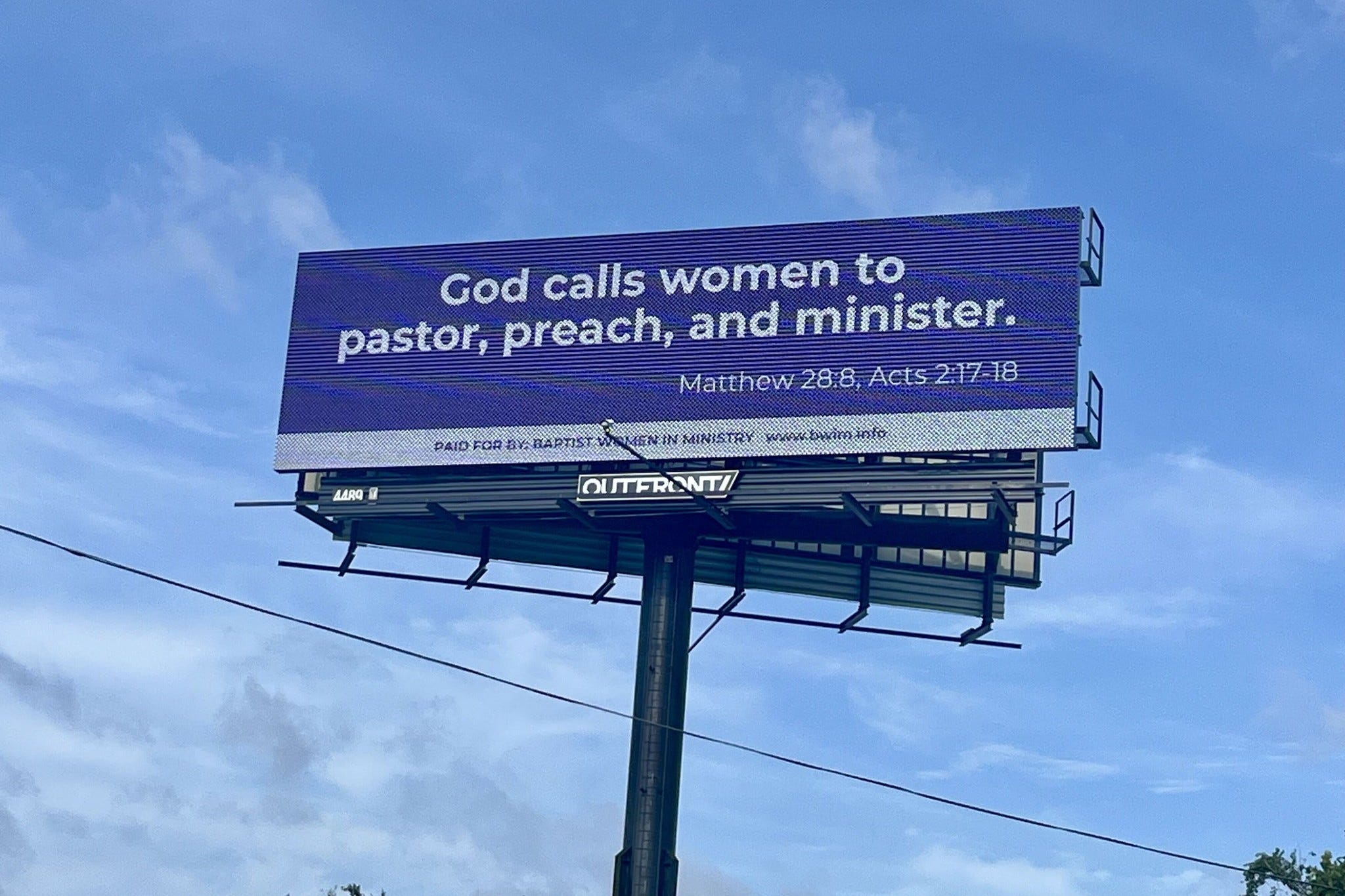
This week’s episode features a conversation between Word&Way Editor Brian Kaylor and Meredith Stone, executive director of Baptist Women in Ministry. The conversation includes discussion of efforts in the Southern Baptist Convention to further target women serving in churches and how BWIM is advocating for women (including with a billboard to greet SBC messengers next week in Orlando, Florida). Listen to the audio version here (or wherever you listen to podcasts) or watch the video version here.

by Brian Kaylor, Word&Way Editor-in-Chief
Pete Hegseth, who likes to call himself “secretary of war,” is drastically reducing the number of religious affiliation codes that military members can select, which provide insights for a chaplain about how to provide appropriate spiritual care. While just 31 codes will remain in use, 180 are being deleted. This creates two significant problems.
First, many faith traditions were completely cut, including Atheist, Druid, Humanist, New Age, Pagan, and Wicca. Ironically, two other traditions cut in this year of celebrating the 250th anniversary of the founding of the United States were two traditions that were popular among the founders: Deist and Unitarian Universalist. Hegseth is saying that individuals in these traditions don’t count. And it will likely lead to less spiritual care for them.
Second, even among traditions that remain, the new list condenses numerous denominations into broader categories. For instance, now there will be just one Baptist category instead of 29, one Methodist instead of 14, and one Presbyterian instead of 13. This means chaplains will be flying more blind as they try to minister to someone.
A Pentagon leader claimed the reduced number of codes “will provide chaplains with clear, readily available information that will better enable them to anticipate the religious support needs of service members and to provide religious support activities that align with service members’ personal faith and practices.” But that’s simply not true.
There are significant differences between Southern, American, National, and Cooperative Baptists. Putting them all in one code eliminates important nuance. Similarly, while the largest Presbyterian denomination is mainline, the next biggest one is evangelical and much more conservative. Or consider the historic Black denomination the African Methodist Episcopal Church. They used to have their own code, but now will have to pick “Christian - Methodist,” “Christian - Episcopal/Anglican,” or “Christian - Other.”
While Hegseth seeks to establish his own faith at the Pentagon with monthly worship services, he is undermining the spiritual care provided to those from different traditions. His war on religious liberty continues.
Other News of Note
David Brockman wrote for Texas Observer about how U.S. Senate hopeful James Talarico’s faith represents the mainline Protestant tradition despite attacks on his faith by rightwing evangelicals.
Katherine Stewart wrote for The New Republic about the push for rightwing “biblical economics.”
Lydia Bugg of The Guardian reported on the rise of “Christian energy drinks.”
The Washington Post published an overview of ways that lawmakers are trying to inject more rightwing Christianity into public schools.
A lawsuit seeking to create the first “public Christian school” in Colorado ended after a new state law made those trying to start the school ineligible. Such efforts for a sectarian public school have also been unsuccessfully tried in other states.
“Populist far-right parties mobilize ‘Christian’ or sometimes ‘Judeo-Christian’ imagery as a way of claiming ‘national’ and ‘civilizational’ distinction vis-à-vis their opponents – ‘liberal universalism’, ‘Islam’, etc. … They claim to defend the so-called Christendom, but they don’t care much for Christ.” —Srdjan Vucetic, public and international affairs professor at the University of Ottawa, on disagreements between far-right groups in Europe and Catholic bishops.
Ruth Graham of the New York Times wrote about how some rightwing Christians see proof of demons in the government’s U.F.O. files.
Makella Knowles wrote for MinistryWatch about the need for churches to address the growing sports gambling crisis.
Russell Contreras of Axios wrote about research showing that AI systems are sidelining religious perspectives even when people seek religious insights.
Photo of the Week
Thanks for reading!